 Forum on Child and Family Statistics
Demographic Background
Understanding the changing demographic characteristics of America's children is critical for shaping social programs and policies. The number of children determines the demand for schools, health care, and other social services that are essential for meeting the daily needs of families. While the number of children living in the United States has grown, the ratio of children to adults has decreased. At the same time, the racial and ethnic composition of the Nation's children continues to change. Demographic composition provides an important context for understanding the indicators presented in this report and provides a glimpse of future American families.
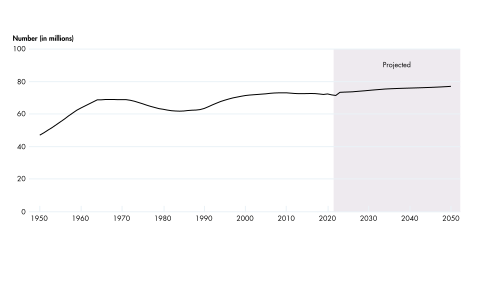
There were 72.5 million children in the United States in 2022, which was 0.4 million less than in 2021. The total number of children is projected to increase to 78.2 million in 2050. In 2022 (the latest year of data available at the time of publication), there were fewer children in the 0–5 age group (22.4 million) than in the 6–11 age group (24.2 million) or the 12–17 age group (25.8 million).
Indicator POP1. Number of children ages 0–17 in the United States, 1950–2022 and projected 2023–2050
SOURCE: U.S. Census Bureau, Population Division
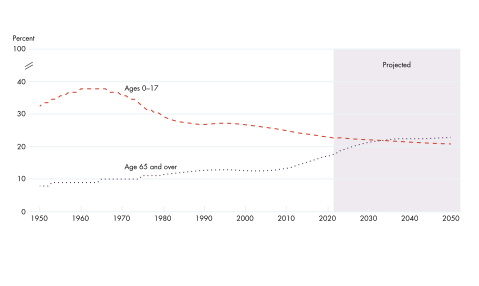
Since the mid-1960s, children have decreased as a proportion of the total U.S. population. In 2022, children made up 22% of the population, down from a peak of 36% at the end of the Baby Boom, in 1964. Children's share of the population is projected to continue its slow decline through 2050, when children are projected to make up 20% of the population.
Indicator POP2: Children ages 0–17 and adults ages 65 and over as a percentage of the U.S. population, 1950–2022 and projected 2023–2050
SOURCE: U.S. Census Bureau, Population Division.
Racial and ethnic diversity has grown dramatically in the United States in the last 3 decades. This growth was first evident among children. In 2022, 49% of U.S. children were White, non-Hispanic; 26% were Hispanic; 14% were Black, non-Hispanic; 6% were Asian, non-Hispanic; and 6% were non-Hispanic "All other races."
This population is projected to become even more diverse in the decades to come. Whereas the percentages of children in most of the other racial and ethnic origin groups have declined, the percentage of children who are Hispanic has grown substantially, increasing from 9% of the child population in 1980 to 26% in 2022. In 2030, less than half of all children are projected to be White, non-Hispanic. By 2050, it is projected that 39% of all children will be White, non-Hispanic; 31% will be Hispanic; 14% will be Black, non-Hispanic; 7% will be Asian, non-Hispanic; and 9% will be non-Hispanic "All other races."
Indicator Pop3: Percentage of children ages 0–17 in the United States by race and Hispanic origin, 1980–2022 and projected 2023–2050
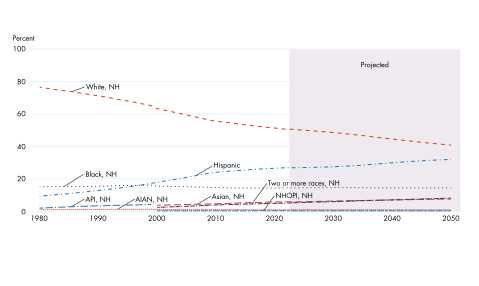
NOTE: NH = non-Hispanic origin; AIAN = American Indian or Alaska Native; API = Asian or Pacific Islander; NHOPI = Native Hawaiian or Other Pacific Islander. Each group represents the non-Hispanic population, with the exception of the Hispanic category itself. Race data from 2000 onward are not directly comparable with data from earlier years. Data on race and Hispanic origin are collected separately. Persons of Hispanic origin may be of any race.
SOURCE: U.S. Census Bureau, Population Division.

Federal Interagency Forum on Child and Family Statistics
